Trump Taps Antitrust Hawk Gail Slater to Take Over DOJ’s Successful Docket of Monopoly Cases
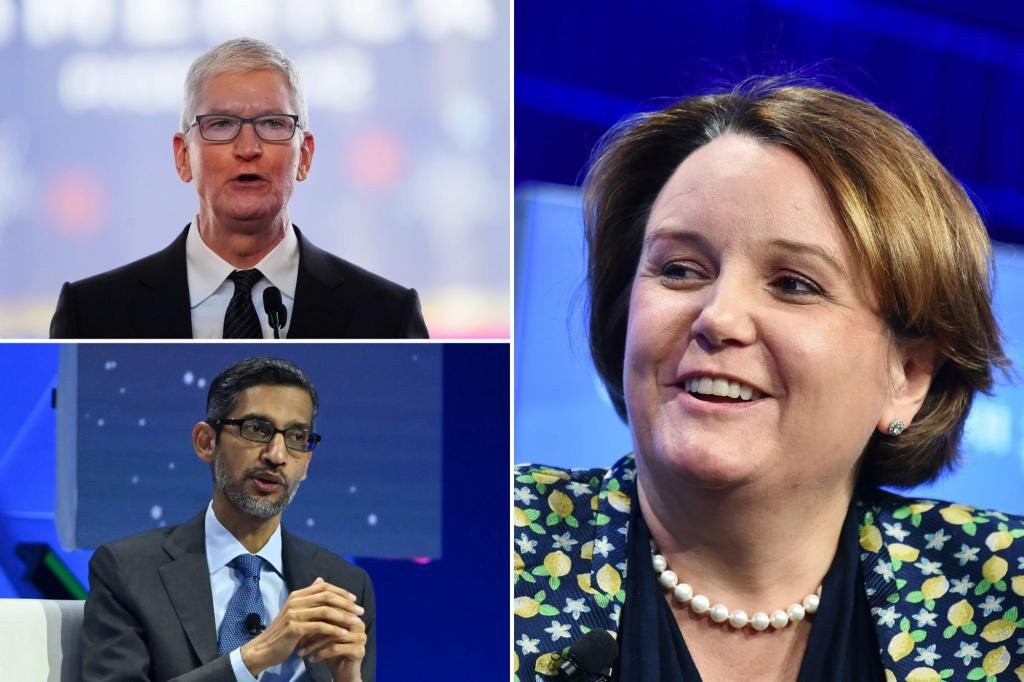
In a move that has stirred both optimism and concern across Washington, former President Donald Trump has reportedly chosen Gail Slater, a seasoned legal strategist known for her aggressive stance on corporate consolidation, to head the Department of Justice’s Antitrust Division. Slater’s appointment signals a sharp continuation—and possible intensification—of the federal government’s ongoing crackdown on monopolistic behavior among America’s biggest corporations.
The decision arrives at a critical time. Over the past several years, the DOJ’s Antitrust Division has taken on some of the most consequential monopoly cases in modern history, targeting tech giants, pharmaceutical conglomerates, and even the entertainment sector. Slater, often described as a “hawk” in antitrust circles, is expected to bring a blend of legal rigor and political pragmatism to the position—an approach that could reshape the balance between free enterprise and corporate accountability in the coming years.
Development
Gail Slater’s selection is no coincidence. A former general counsel for the Internet Association and later a senior advisor on technology and competition policy in the Trump White House, Slater has spent much of her career at the intersection of law, economics, and regulation. Insiders describe her as both tough and strategic—an attorney capable of navigating the complexities of the modern digital economy while maintaining a clear focus on protecting competitive markets.
Her appointment marks the continuation of a bipartisan shift in Washington’s approach to antitrust enforcement. For decades, antitrust policy was largely guided by the consumer welfare standard, emphasizing whether mergers or monopolistic practices harmed consumers through higher prices. But in recent years, both Republicans and Democrats have pushed for a broader interpretation—one that considers market dominance, innovation, and even democratic stability.
Slater’s views appear to align with this evolving philosophy. While she has criticized overreach by federal regulators in the past, she has also expressed concern about the unchecked power of major corporations, particularly in the technology sector. Her record suggests a willingness to challenge companies that use data dominance, platform manipulation, or unfair business practices to stifle competition.
Under her leadership, the DOJ’s Antitrust Division is expected to maintain, if not expand, its aggressive docket of cases against some of the largest players in the U.S. economy. These include ongoing lawsuits against Google, Apple, Amazon, and Meta, as well as a renewed focus on vertical integration in industries such as healthcare, energy, and telecommunications.
Observers are divided on what Slater’s appointment means for the corporate world. Supporters argue that her experience in both the private and public sectors gives her a unique perspective on how to enforce antitrust laws effectively without overburdening businesses. Critics, however, worry that her close ties to industry groups could compromise her ability to act impartially when confronting the same companies she once represented.
Still, one thing is clear: Slater’s arrival signals that antitrust enforcement will remain a central pillar of Trump’s economic agenda. During his previous term, Trump’s administration launched multiple antitrust actions, some of which reshaped corporate behavior across Silicon Valley and Wall Street. By bringing Slater back into the fold, he appears poised to double down on his populist message of “fair markets for American workers and consumers.”
Antitrust Landscape Under Slater
The current antitrust environment is one of the most active in decades. The DOJ has filed landmark lawsuits challenging corporate mergers and acquisitions, arguing that excessive market concentration threatens innovation and consumer choice. Slater inherits a docket that is both impressive and complex, including cases that have far-reaching implications for global business practices.
One of her first challenges will be overseeing the ongoing litigation against Google. The tech giant faces allegations that it used its dominance in online search and advertising to suppress competition. The case, which could redefine antitrust precedent in the digital age, has already exposed internal communications revealing how Google allegedly manipulated its ecosystem to maintain power. Slater’s role will be to push the case forward while ensuring that the DOJ’s strategy remains cohesive and credible.
Another key focus will likely be the DOJ’s actions against Apple, which faces scrutiny for its App Store policies and the fees it imposes on developers. Critics argue that Apple’s control over its ecosystem amounts to an abuse of market power, while defenders claim it ensures product security and quality. Slater’s approach will determine whether the government continues to pursue structural remedies—such as breaking up or restricting parts of large corporations—or favors negotiated settlements.
Beyond tech, Slater is expected to address merger consolidation in the healthcare sector, where hospital systems and pharmaceutical companies have grown increasingly dominant. The DOJ has expressed concern that excessive consolidation has driven up costs and reduced innovation, particularly in rural areas.
Political and Economic Implications
From a political standpoint, Trump’s decision to appoint Gail Slater can be seen as an effort to solidify his economic populism while appealing to bipartisan frustrations over corporate influence. Antitrust enforcement has become one of the few policy areas where progressive Democrats and conservative Republicans find common ground. Both camps see excessive corporate concentration as a threat—to consumers, small businesses, and even democracy itself.
Slater’s appointment may also serve a broader strategic purpose. Trump’s team recognizes that public sentiment has shifted sharply against “Big Tech.” In recent polls, a majority of Americans across the political spectrum believe that companies like Meta and Amazon have too much power. By empowering a known antitrust hawk, Trump positions himself as a defender of small businesses and individual freedom, even as critics accuse him of politicizing regulatory agencies.
Economically, stronger antitrust enforcement under Slater could have both immediate and long-term effects. In the short term, aggressive lawsuits may create uncertainty in financial markets, as investors worry about potential corporate breakups or restructuring. Over the long run, however, experts suggest that breaking up monopolies could stimulate innovation, lower consumer prices, and foster a more competitive business environment.
Challenges Ahead
Despite her credentials, Gail Slater will face enormous challenges. The Antitrust Division’s workload is unprecedented, and many of its cases involve industries with complex global supply chains. Success will require not only legal expertise but also careful coordination with international regulators and domestic agencies like the Federal Trade Commission (FTC).
Moreover, political pressures will be intense. Every major antitrust case carries the risk of backlash from corporate lobbyists and partisan critics. Trump’s opponents are likely to frame Slater’s appointment as an attempt to weaponize the DOJ against specific industries, while supporters will hail it as a long-overdue correction to decades of lax enforcement.
Funding and staffing will also be critical issues. The DOJ’s Antitrust Division has expanded its litigation teams in recent years, but the number of active cases continues to outpace available resources. Slater will need to balance ambitious enforcement goals with practical limitations.
FAQ – Frequently Asked Questions
- Who is Gail Slater?
Gail Slater is a seasoned attorney specializing in technology and competition law. She previously served as general counsel for the Internet Association and as a senior advisor in the Trump administration. - What makes her an “antitrust hawk”?
She is known for her tough stance on corporate monopolies and her belief that excessive concentration harms innovation and consumer welfare. - What cases will she oversee as head of the DOJ’s Antitrust Division?
She will inherit ongoing cases against tech giants like Google, Apple, Amazon, and Meta, as well as investigations into consolidation in healthcare and energy sectors. - Why did Trump choose her for this position?
Trump values her experience balancing regulatory enforcement with pro-business perspectives. Her prior White House role demonstrated her ability to navigate both political and economic dimensions of policy. - How does her appointment affect Big Tech?
Tech companies may face continued scrutiny and potential litigation under Slater’s leadership. Her appointment suggests that the DOJ will not ease up on existing monopoly cases. - What challenges might she face?
She will need to manage political pressure, resource constraints, and coordination with international regulators while maintaining public trust in the DOJ’s impartiality. - Will her approach differ from previous DOJ leadership?
While she is expected to continue many of the current initiatives, her legal philosophy may emphasize targeted enforcement and pragmatic settlements. - Could her corporate background create conflicts of interest?
Critics have raised concerns, but ethics experts note that recusal protocols and oversight mechanisms exist to prevent conflicts in high-profile cases. - How might her leadership influence future mergers and acquisitions?
Companies will likely face tougher scrutiny, especially in tech and healthcare sectors, as regulators prioritize competition and consumer protection. - What does this mean for consumers?
If successful, Slater’s enforcement strategy could lead to more competition, lower prices, and greater innovation—but the benefits may take years to materialize.
Conclusion
Gail Slater’s appointment as head of the DOJ’s Antitrust Division marks a pivotal moment in U.S. economic policy. Her combination of legal expertise and political insight positions her to influence how the federal government confronts monopolistic behavior in the years ahead. Whether she proves to be a reformer who restores balance to competitive markets or a controversial enforcer caught between politics and principle remains to be seen.
For Donald Trump, the move reinforces his image as a populist challenger to corporate power. For Slater, it represents both an opportunity and a test—a chance to demonstrate that effective antitrust enforcement can protect innovation, fairness, and democracy itself. The next chapter in America’s antitrust story has just begun, and all eyes will be on Gail Slater as she takes the helm of one of the most powerful legal divisions in Washington.