A Look Inside America’s First Solar-Powered Community — And It’s Hurricane-Proof, Too
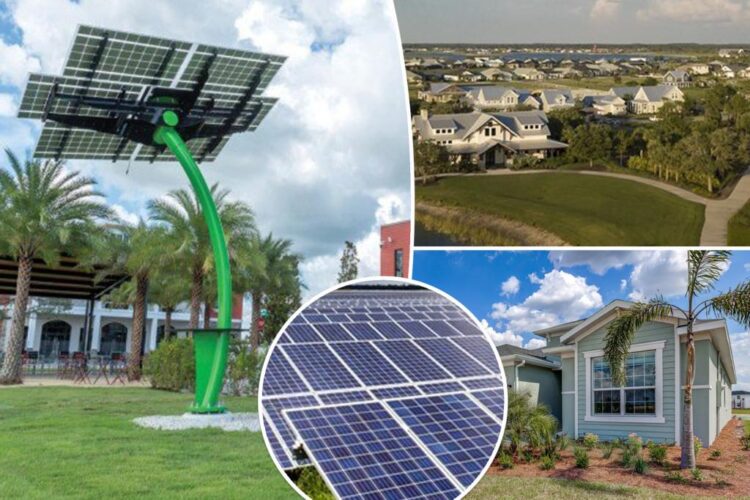
As the effects of climate change intensify and extreme weather events grow more frequent, communities across the United States are rethinking how they generate power and build resilience. One pioneering neighborhood in Florida has taken that mission to the next level. Known as Babcock Ranch, it is widely recognized as America’s first fully solar-powered community—a place where clean energy meets cutting-edge engineering. But what truly sets it apart is that it has proven to be virtually hurricane-proof.
When Hurricane Ian tore through Florida in 2022, leaving millions without electricity, Babcock Ranch stood as a beacon of light—literally. The homes remained powered, the lights stayed on, and not a single resident was seriously injured. Since then, the community has become a model for sustainable living, showing the world that resilience and renewable energy can coexist in harmony.
Development
Babcock Ranch sits about 25 miles northeast of Fort Myers, Florida. Founded by developer Kitson & Partners, the community spans over 18,000 acres and integrates more than 700,000 solar panels managed by Florida Power & Light (FPL). These panels generate enough energy to power every home and business within the town—plus some. Excess energy is stored and distributed back to the grid, creating a self-sustaining cycle that ensures reliability even when disaster strikes.
The vision for Babcock Ranch began long before sustainability became a buzzword. In the early 2000s, developer Syd Kitson, a former NFL player turned entrepreneur, purchased the land with the goal of creating a town that could balance modern living with environmental stewardship. The project was built on five core principles: renewable energy, water conservation, storm resilience, community engagement, and technological innovation.
Building for Resilience
One of the key reasons Babcock Ranch survived Hurricane Ian virtually unscathed lies in its forward-thinking infrastructure. The community was designed from the ground up with climate challenges in mind. Every home is built above the regional floodplain, using reinforced concrete and energy-efficient materials. Underground utilities protect power lines from high winds, and drainage systems are engineered to divert stormwater safely away from homes.
Perhaps the most impressive element is the solar microgrid that powers the community. Unlike traditional grids that rely on centralized power plants, Babcock’s energy system is decentralized. The solar farm connects to on-site battery storage facilities, allowing the town to operate independently if the larger grid fails. During Hurricane Ian, when nearby towns plunged into darkness, Babcock Ranch’s microgrid kicked in seamlessly, keeping refrigerators running, air conditioners humming, and Wi-Fi networks active.
Resident Lisa Hall, who rode out the storm in her home, described the experience: “The winds were howling outside, but we never lost power. It felt surreal. When we saw the devastation just a few miles away, we realized how different things could have been.”
Environmental Innovation
Beyond storm resilience, Babcock Ranch is a model of environmental integration. Nearly half of its land—about 9,000 acres—is preserved as open green space, including wetlands, lakes, and wildlife corridors. The town’s landscaping uses native plants that require minimal irrigation, reducing water waste.
Solar panels line rooftops, parking lots, and even recreational areas, blending seamlessly with the architecture. Each home is equipped with smart thermostats, LED lighting, and water-efficient appliances. Electric vehicle charging stations are available throughout the town, and autonomous shuttles provide eco-friendly transportation.
Waste management also follows a circular model. The community encourages composting, recycling, and low-waste living. Schools and community centers run educational programs to teach residents about sustainability practices, creating a culture of shared responsibility.
A Community Built for the Future
Babcock Ranch isn’t just about technology—it’s about people. From the beginning, the developers emphasized community engagement as a core pillar. The town features pedestrian-friendly streets, local farmers markets, community gardens, and parks where residents can gather and connect.
Education plays a vital role too. The Babcock Neighborhood School, powered by renewable energy, incorporates sustainability into its curriculum. Students learn how solar panels work, how to grow vegetables hydroponically, and how to design eco-conscious projects. This hands-on approach ensures that the next generation grows up understanding the importance of environmental stewardship.
Economically, the town has flourished. The population has grown steadily, attracting both retirees and young families seeking a balance between modern convenience and ecological mindfulness. Businesses focused on green technology, sustainable design, and wellness services have also set up shop, creating new local jobs.
Lessons from Hurricane Ian
The ultimate test for Babcock Ranch came in 2022 when Hurricane Ian, one of the most powerful storms ever to hit Florida, made landfall. While neighboring communities suffered catastrophic damage, Babcock Ranch emerged with only minor issues—some downed trees and cosmetic repairs.
Experts credit this outcome to the town’s unique combination of resilient design and renewable energy infrastructure. The storm validated years of planning and proved that climate-smart development isn’t just possible—it’s practical.
Following the hurricane, delegations from around the world visited Babcock Ranch to study its model. Urban planners, engineers, and government officials from countries including Japan, the Netherlands, and Brazil have all sought to replicate aspects of its design.
Expanding the Vision
Encouraged by Babcock Ranch’s success, other developers and cities are beginning to adopt similar strategies. Florida Power & Light has announced plans to expand solar-powered communities across the state. Meanwhile, urban planners are examining how microgrid technology could be used to make metropolitan areas more resilient to power outages.
Architectural firms are also rethinking how they design homes in coastal and flood-prone areas. Elevated foundations, reinforced roofing, and energy-efficient layouts are becoming the new standard. Experts believe that in the future, climate resilience will no longer be a niche feature—it will be a necessity.
The Broader Significance
Babcock Ranch symbolizes more than just innovation; it represents a paradigm shift in how Americans view energy independence and community building. In a nation long reliant on fossil fuels and centralized grids, the town stands as proof that sustainability can coexist with comfort and convenience.
Urban sustainability expert Dr. Ethan Morales explains, “Babcock Ranch is a living experiment in the future of cities. It shows that if you combine renewable energy with smart design, you don’t just reduce emissions—you build safer, more resilient communities.”
The model’s success also challenges policymakers to rethink infrastructure investments. Rather than focusing solely on rebuilding after disasters, governments could prioritize preventive measures—designing systems that can withstand climate events from the start.
FAQ – Frequently Asked Questions
- Where is America’s first solar-powered community located?
Babcock Ranch is located in southwest Florida, about 25 miles northeast of Fort Myers. - How does the community generate electricity?
The town is powered by more than 700,000 solar panels connected to a microgrid managed by Florida Power & Light. Excess energy is stored in batteries and redistributed as needed. - Did Babcock Ranch lose power during Hurricane Ian?
No. The community maintained power throughout the storm, thanks to its solar microgrid and underground utility systems. - Are all homes in the community solar-powered?
Yes. Every home and building in Babcock Ranch is powered by solar energy, supplemented by advanced storage and smart-grid systems. - How does Babcock Ranch manage storm flooding?
The community uses elevated construction, permeable landscaping, and a network of retention ponds to safely redirect stormwater. - Is it expensive to live in Babcock Ranch?
While home prices are slightly higher than average for the region, residents save significantly on utility costs, and the community offers long-term sustainability benefits. - Can other cities replicate this model?
Yes. Urban planners worldwide are studying Babcock Ranch as a blueprint for future sustainable and climate-resilient developments. - What role does education play in the community?
Sustainability education is integrated into schools and community programs, ensuring residents—especially children—understand environmental responsibility. - Does Babcock Ranch still connect to the main power grid?
Yes, but it operates independently when necessary. The microgrid can disconnect and function autonomously during outages. - What’s next for Babcock Ranch?
Developers plan to expand the town, add more housing, and continue improving energy storage and environmental technologies.
Conclusion
Babcock Ranch stands as a groundbreaking example of what’s possible when innovation meets intention. In a world facing rising temperatures and increasingly destructive storms, this solar-powered, hurricane-resistant town demonstrates that sustainability isn’t just a lifestyle choice—it’s a survival strategy.
As more communities confront the realities of climate change, Babcock Ranch offers a roadmap for the future: one powered by the sun, protected by smart design, and grounded in community values. Its success is not merely about energy efficiency or engineering—it’s about resilience, foresight, and the belief that humanity can thrive without compromising the planet.