NYT Opponent Blames ‘Manosphere’, Lack Of Dating And Women’s Success For Trump’s 2024 Victory
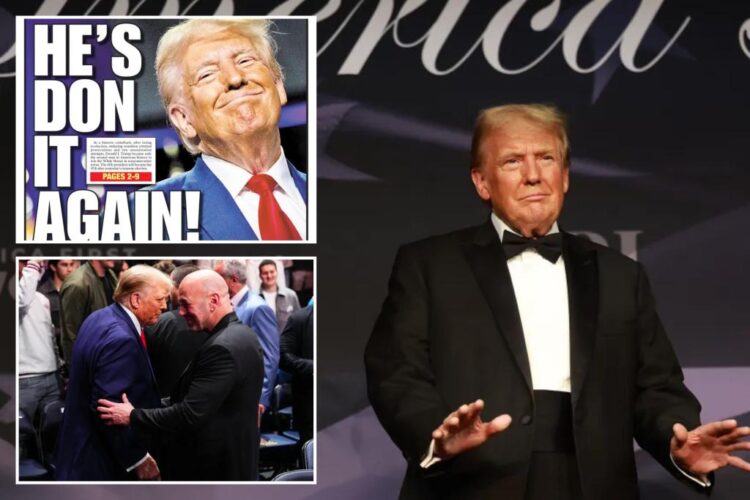
As the dust settles from the 2024 U.S. presidential election, debates about why Donald Trump returned to the White House are far from over. Analysts, academics, and pundits continue dissecting the results, seeking to understand how the political landscape shifted so dramatically. But one unexpected voice has reignited controversy — a New York Times opponent and social critic who claims that Trump’s victory wasn’t just about economics or policy, but rather, a cultural backlash driven by the so-called “manosphere”, declining dating trends, and the evolving roles of women in modern society.
This argument has stirred fierce reactions across political and social circles. According to this analyst, Trump’s win symbolizes a deep emotional divide in American culture — one that reflects not only political dissatisfaction but also personal and gender-based frustrations. By linking the election outcome to issues like loneliness, relationship dynamics, and gender success disparities, the commentary has added a provocative dimension to an already heated national conversation.
Development
The Cultural Lens Behind Political Power
While most post-election analyses focused on economic fears, border policies, and partisan loyalty, the critic’s essay in opposition to The New York Times took a different route. It argued that Trump’s victory reflected a growing sense of alienation among men, particularly those who feel marginalized by social and cultural changes in the last decade.
The piece references the “manosphere”, an online ecosystem composed of influencers, forums, and podcasts that discuss masculinity, gender relations, and men’s rights — often through a controversial or reactionary lens. According to the author, this community has become a powerful cultural force, shaping how millions of young men perceive politics, dating, and success.
“Politics doesn’t exist in a vacuum,” the critic wrote. “When millions of men feel ignored, mocked, and left behind, they look for leaders who validate their frustrations. Trump did exactly that.”
A Changing Dating Landscape
The commentary further connects these frustrations to the modern dating economy, arguing that the rise of dating apps and shifting gender roles have created a generation of men who feel excluded from intimacy and connection.
Citing research from the Pew Research Center, the author highlights that over 60% of single men under 30 reported not actively seeking relationships in 2023 — a statistic that mirrors a growing sense of social withdrawal among young men. Meanwhile, women’s educational and economic progress has reshaped expectations, leading to mismatched standards and fewer partnerships.
“The decline of dating is not a trivial statistic,” the analyst continues. “It’s a reflection of how disconnection, resentment, and loneliness are shaping political identities.”
Women’s Success and the Political Divide
Another pillar of the argument focuses on women’s success in modern America — academically, professionally, and socially. The critic argues that while women’s achievements should be celebrated, they have also contributed to a subtle backlash among men who feel increasingly irrelevant or undervalued.
Statistics show that women now earn the majority of college degrees and are steadily gaining economic independence. This shift, according to the essay, has upended traditional dynamics, leading some men to associate feminism and progressivism with personal failure or exclusion.
“This isn’t about hatred of women,” the critic insists. “It’s about dislocation — a sense that the world men were raised to expect no longer exists. And Trump’s campaign capitalized on that dislocation.”
The Role of Online Radicalization
The piece also dives into the digital ecosystem that fuels such sentiments. Platforms like YouTube, TikTok, and X (formerly Twitter) host influential voices who amplify grievances around gender, success, and perceived cultural bias. The critic labels this trend “politicized loneliness” — a phenomenon where individuals seek belonging in ideological echo chambers.
By engaging with content that validates frustration, many of these users become more resistant to mainstream narratives. “The manosphere,” the article claims, “has become a recruitment hub for anti-establishment movements that align with figures like Trump.”
A Broader Backlash Against Modernity
Sociologists have long observed that political revolts often stem from cultural displacement rather than pure economic distress. Trump’s 2024 campaign leaned heavily on nostalgia — promising to restore pride, masculinity, and national identity.
The critic argues that this message resonated not only with working-class Americans but also with a younger demographic of men alienated by a digital and emotionally disconnected culture. These men, once considered apolitical, found solidarity in anti-mainstream sentiment — a rejection of what they perceive as moral superiority in liberal discourse.
“The movement wasn’t just about jobs,” the critic wrote. “It was about purpose. And for millions, Trump’s rhetoric offered a sense of belonging they no longer found elsewhere.”
Media, Masculinity, and Misunderstanding
The essay also criticizes mainstream outlets, including The New York Times, for underestimating the cultural depth of Trump’s appeal. According to the author, much of the media framed Trump supporters as misinformed or irrational, without acknowledging the deeper emotional and gendered dimensions of their motivations.
“Mocking disenfranchised men won’t solve the problem,” the critic wrote. “Listening might.”
Women Voters and the Irony of Backlash
Interestingly, while the manosphere narrative centers on male discontent, the critic also points out that many women voted for Trump in 2024 — a fact often overlooked by liberal pundits. The essay suggests that some women sympathized with the frustrations of men in their families or communities, or simply prioritized economic and safety concerns over gender-based voting narratives.
This dynamic challenges the assumption that gender divides are strictly oppositional. “In many households,” the critic notes, “Trump’s message of security and identity spoke to shared fears, not just masculine ones.”
Experts Push Back
Not everyone agrees with this interpretation. Academics and sociologists quickly responded to the essay, accusing it of oversimplifying gender dynamics and overlooking structural inequalities.
Dr. Elaine Porter, a professor of sociology at Georgetown University, countered: “Blaming women’s progress for men’s political radicalization ignores the broader forces of inequality, automation, and alienation that affect everyone. This isn’t a gender war — it’s a systemic one.”
Meanwhile, digital culture researchers point out that while the manosphere is influential, it represents only a fraction of the population. “It’s a loud minority,” says journalist Thomas Keegan. “But its emotional intensity has an outsized cultural effect.”
The Human Element of Politics
At its core, the debate highlights a crucial truth: elections are not only won in policy debates but in the emotional lives of citizens. Trump’s 2024 campaign tapped into feelings of invisibility, disillusionment, and nostalgia — offering identity where society seemed to offer criticism.
The NYT opponent’s analysis, while controversial, underscores the power of emotional storytelling in modern politics. Whether one agrees or not, the notion that loneliness and gendered frustration could shape a presidential election challenges traditional political science in profound ways.
Beyond Blame — The Need for Understanding
Ultimately, the article argues for empathy, not polarization. It suggests that dismissing male loneliness or resentment as “toxic” only entrenches division. Instead, meaningful dialogue and mutual respect between genders could help bridge the emotional gaps that drive cultural polarization.
“Trump’s win,” the critic concludes, “shouldn’t be seen solely as a political event, but as a mirror of emotional neglect — of men and women alike. Until we learn to understand each other again, these cultural wars will continue to shape our politics.”
FAQ – Frequently Asked Questions
1. Who is the NYT opponent referenced in this debate?
The critic is an independent columnist who often challenges mainstream media narratives, though their identity remains less public than the publication’s more famous contributors.
2. What does the term “manosphere” mean?
It refers to a collection of online communities discussing men’s issues, masculinity, and dating — often viewed as a reactionary counter to modern feminism.
3. How does the manosphere relate to Trump’s political base?
The manosphere amplifies anti-establishment views that overlap with populist messages, fostering a sense of community among disaffected men.
4. Did dating culture really influence the 2024 election?
The critic argues that isolation and dating dissatisfaction contributed to a cultural mood that favored Trump’s narrative of restoration and belonging.
5. Why is women’s success considered a factor in this analysis?
The essay suggests that men’s perception of being “left behind” by women’s rapid progress has created identity struggles reflected in voting behavior.
6. How have experts responded to these claims?
Many academics reject the idea that gender dynamics alone explain Trump’s victory, pointing instead to economic, regional, and institutional factors.
7. Is the manosphere growing in political influence?
Yes. Social media algorithms have amplified manosphere content, expanding its reach among young men globally.
8. How did Trump’s 2024 campaign engage these sentiments?
By using themes of strength, defiance, and masculine identity, Trump’s messaging resonated with voters who felt misunderstood by mainstream culture.
9. What role did women play in Trump’s 2024 win?
Despite gender divides, many women voted for Trump based on economic priorities, security, or cultural values, complicating traditional gender narratives.
10. What does this analysis reveal about American society?
It highlights how deeply personal issues — loneliness, identity, and belonging — now intersect with politics in shaping electoral outcomes.
Conclusion
The notion that Trump’s 2024 victory stemmed partly from gendered frustration and cultural alienation is as unsettling as it is thought-provoking. Whether one agrees or not, it forces a confrontation with the emotional undercurrents shaping American democracy.
By linking political behavior to personal disconnection, the NYT opponent’s analysis reframes how we understand elections — not as mere contests of policy, but as reflections of human emotion and cultural evolution.
In the end, the controversy underscores a crucial point: the real challenge facing America isn’t just political division, but emotional estrangement. Until society finds new ways to reconnect men, women, and shared purpose, the cycle of resentment and polarization will continue — shaping not just elections, but the very fabric of American life.