
Gunmaker Smith & Wesson Applauds Elon Musk’s X After Being Suspended by Facebook
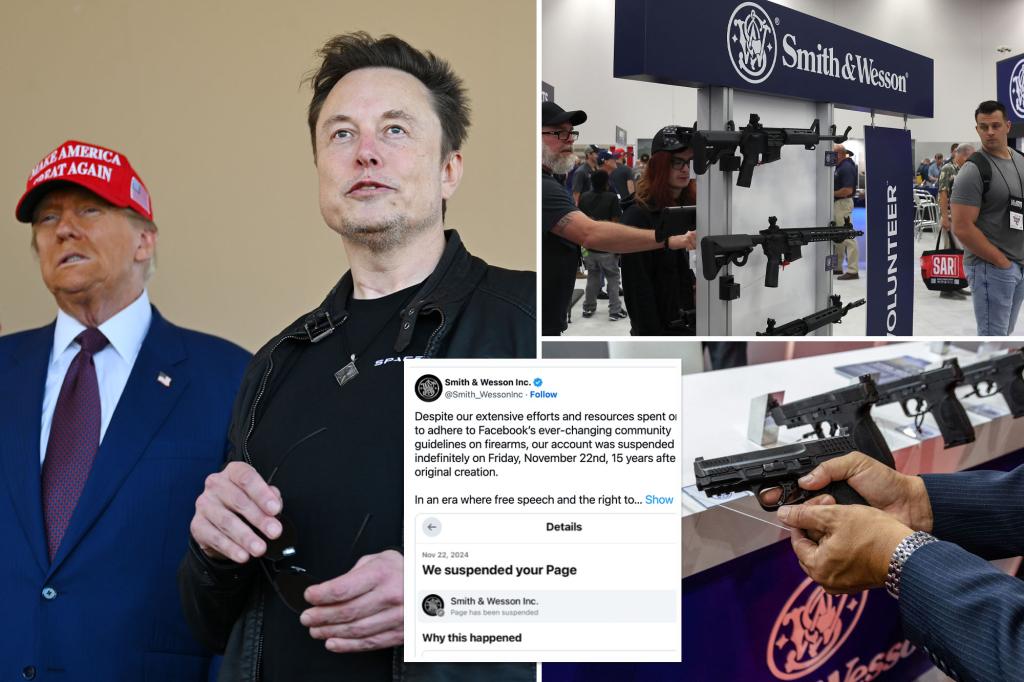
The debate over free speech and corporate censorship reignited this week as gun manufacturer Smith & Wesson praised Elon Musk’s social platform X (formerly Twitter) after its official Facebook account was suspended. The firearms giant claims that Facebook’s moderation policies unfairly targeted lawful businesses, while Musk’s platform continues to champion open dialogue — even for controversial industries.
- Meta Plans to Build World’s $10 Billion Undersea Internet Cable: Report
- Trump Taps Antitrust Hawk Gail Slater to Take Over DOJ’s Successful Docket of Monopoly Cases
- This texting habit means you have higher emotional intelligence, according to science
- Elon Musk Tesla’s $56 billion pay package rejected again by Delaware judge
- Apple’s New AI Could Leak Sensitive Data, Experts Warn – Take These Steps to Protect Your Privacy
The suspension has sparked discussions about social media bias, corporate responsibility, and the growing divide between digital platforms over what constitutes acceptable content. Smith & Wesson’s response highlights a broader cultural battle over the limits of expression and the role of tech companies in regulating it.
- Elon Musk seeks injunction to block OpenAI’s plans to become profitable ‘Frankenstein’: filing
- A Look Inside America’s First Solar-Powered Community — And It’s Hurricane-Proof, Too
- Embarrassed Spotify Users Vow to Hack Their ‘Wrapped’ Results – They’d ‘Rather Be in Jail’ Than Reveal the Truth
- Black Friday Shoppers Targeted by Scams – Experts Reveal Tips to Protect Against ‘Too Good to Be True’ Deals
- Netflix Users Warned of ‘Scary’ Scam That Could Steal Credit Card Information
The Facebook Suspension
Smith & Wesson confirmed that its official Facebook page was suspended late last week for allegedly violating the platform’s commerce and advertising policies. According to the company, the page was flagged for “promoting the sale of regulated goods,” a violation that has long been enforced under Facebook’s community standards.
While firearms sales are prohibited on Meta’s platforms, Smith & Wesson insists that its posts followed all applicable laws and contained no direct sales links. “We were sharing updates about our products and history — not selling firearms,” said a company spokesperson in a statement. “This action reflects a growing intolerance toward lawful businesses in the digital space.”
The suspension, which remains under review, has prompted outrage among gun rights advocates who accuse Meta of silencing voices that represent American heritage and constitutional rights. “It’s not about sales; it’s about visibility,” said one user on X. “If Smith & Wesson can’t have a page, what does that say about freedom of expression online?”
Turning to Elon Musk’s X
In contrast, Elon Musk’s X has become a refuge for users and businesses frustrated by what they see as overreach from traditional platforms. Since Musk’s takeover in 2022, the platform has relaxed its moderation policies and positioned itself as a haven for free speech.
Smith & Wesson’s social media team quickly turned to X to express appreciation. “While some platforms silence us, others welcome open dialogue,” the company posted. “Thank you, @elonmusk, and thank you, X, for standing up for open communication.”
The post gained thousands of likes within hours, with supporters praising the move as a stand for both the Second Amendment and digital freedom. “X is the only place left where companies like Smith & Wesson can exist without being erased,” wrote one commenter.
The Broader Debate on Digital Censorship
The clash between Facebook and Smith & Wesson reflects a deeper cultural and political divide. Supporters of stricter content moderation argue that platforms have a moral duty to prevent the promotion of weapons or potentially harmful industries. Opponents counter that such policies disproportionately affect lawful businesses and suppress legitimate discussions about gun ownership and safety.
“This is not just about guns — it’s about selective enforcement,” said media analyst Jenna Marks. “Big Tech companies have drawn inconsistent lines about what’s acceptable speech. When a firearm manufacturer shares historical content and gets banned, it’s fair to question the standard.”
Facebook has defended its approach, emphasizing that its policies are designed to comply with international regulations and ensure user safety. “We do not allow content that directly promotes the sale of firearms or ammunition,” Meta said in a statement. “Our review systems are designed to detect and remove such material automatically.”
Smith & Wesson’s Digital Strategy
Smith & Wesson, one of the oldest and most iconic gun manufacturers in the United States, has faced similar challenges before. The company maintains active social media accounts across multiple platforms, often using them to highlight its history, craftsmanship, and commitment to safety training.
Following its Facebook suspension, the company doubled down on alternative platforms — including X, YouTube, and Truth Social — to maintain communication with its customer base. “We will continue to engage responsibly and transparently wherever we are welcome,” the company said. “Our message is about responsible ownership and education, not politics.”
The firearms industry has long struggled with social media restrictions. YouTube, for instance, has periodically tightened its rules regarding firearm-related content, banning tutorials that involve the assembly or modification of weapons. Instagram has also limited firearm advertisements, citing concerns about accessibility to minors.
Elon Musk’s Free Speech Stance
Elon Musk has repeatedly stated that X will defend free expression within the bounds of the law. Since acquiring Twitter, he has reinstated previously banned accounts, scaled back automated moderation tools, and criticized other platforms for what he calls “corporate overreach.”
“Freedom of speech is the foundation of democracy,” Musk posted earlier this month. “Even if you disagree with someone, silencing them only gives their ideas more power.”
Smith & Wesson’s praise aligns with a growing number of businesses turning to X for unfiltered engagement. Musk’s platform has become particularly popular among conservative audiences, free speech advocates, and industries that feel marginalized by Big Tech’s rules.
However, critics argue that X’s leniency has also opened the door to misinformation, harassment, and extremist content. “There’s a fine line between free speech and the amplification of harmful ideas,” said Dr. Alexis Turner, a sociologist who studies online communities. “Musk’s challenge is maintaining openness without creating chaos.”
Public Reaction and Political Undercurrents
The Smith & Wesson–Facebook controversy has reignited political debates around tech regulation and the Second Amendment. Conservative lawmakers have accused Meta of discriminating against lawful industries, while progressive groups argue that firearm promotion has no place on mainstream platforms.
Republican Senator Josh Hawley called the suspension “digital discrimination against American values,” while Democratic Representative Ayanna Pressley defended Facebook’s actions, saying, “Platforms have a responsibility to prevent the glorification of weapons in a country plagued by gun violence.”
On X, the discussion has been predictably polarized. Supporters of Smith & Wesson celebrated the company’s defiance, using hashtags like #FreeSpeech and #SupportTheSecond. Critics, meanwhile, argued that social platforms have the right — and responsibility — to limit gun-related content.
Tech Platforms and Selective Enforcement
The incident highlights a growing inconsistency in how tech companies enforce content rules. While firearm-related posts are restricted, other controversial industries — such as cryptocurrency, alcohol, and gambling — often face fewer barriers to advertising and engagement.
“This selective moderation creates a perception of bias,” noted digital policy researcher Mark Ellis. “When certain industries are consistently penalized while others are celebrated, users lose trust in the platform’s neutrality.”
In response, some tech experts suggest that more transparent policies could bridge the divide. “Clear, consistent enforcement is key,” Ellis added. “If Meta outlined its standards more precisely and communicated with affected companies, conflicts like this could be avoided.”
Conclusion
Smith & Wesson’s clash with Facebook and embrace of Elon Musk’s X encapsulate the modern tension between regulation and freedom online. While Meta continues to enforce strict guidelines on firearm content, Musk’s platform positions itself as the frontier of unfiltered expression — for better or worse.
As industries increasingly migrate toward platforms that promise fewer restrictions, the internet risks becoming more fragmented, with ideological lines drawn across digital borders.
For Smith & Wesson, the message is clear: if Big Tech won’t provide space for lawful businesses to speak, alternative platforms will. And for millions of Americans following the debate, the question remains — where does responsible moderation end, and censorship begin?