
Why Liverpool Are Protesting Controversial VAR ‘Decision’ From Man City Loss
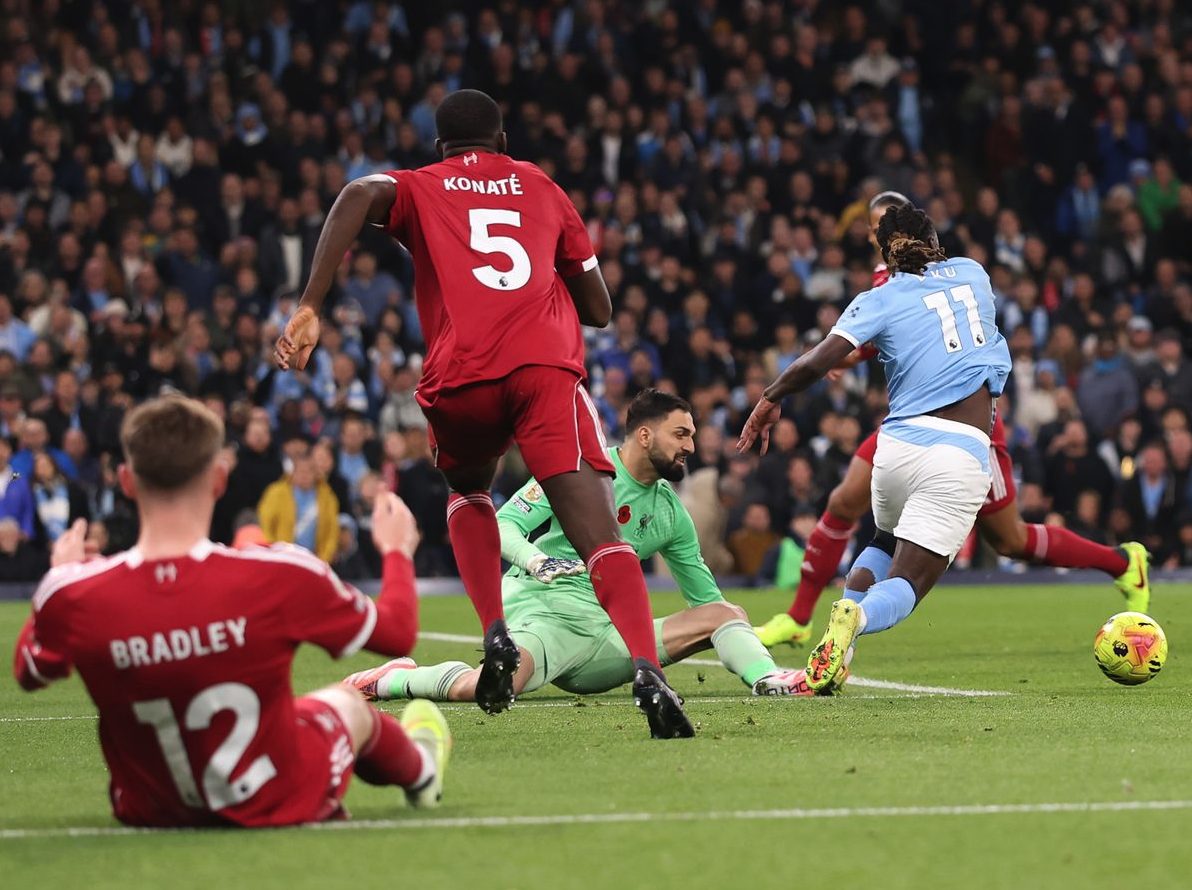
Liverpool’s 3-1 defeat to Manchester City has sparked major controversy after a disputed VAR decision during the second half left players, coaches, and fans outraged. The club has formally submitted a protest to the Professional Game Match Officials Limited (PGMOL), claiming that critical refereeing errors directly influenced the outcome of the match. According to the latest reports from Sky Sports, BBC Sport, and The Athletic, the incident — involving what Liverpool argue was a clear handball by City defender Manuel Akanji — could have changed the course of the game when the score was still 2-1.
- La Liga club reject €30 million offer for Barcelona striker target – report
- Transfer Rumors: Lamine Yamal’s Transfer Demand; Vini Jr Sparks Real Madrid Civil War
- The 13 Best Premier League Players from Gameweek 11
- Atlético de Madrid: U.S.-based firm new majority owner
- Three Reasons Barcelona Should Accept Stunning €75m Bayern ‘offer’
The incident that changed everything
The controversy erupted in the 68th minute of the clash at the Etihad. Liverpool’s forward Darwin Núñez fired a shot that appeared to strike Akanji’s extended arm inside the penalty area. Referee Michael Oliver waved play on, and despite a VAR review, no penalty was awarded. The decision left Liverpool’s players furious, with captain Virgil van Dijk and manager Arne Slot demanding an explanation on the sideline.
- Liverpool’s Best XI of the Season So Far: Highest Rated Players
- Barcelona Defensive Ace Continues to Make a Case for a Renewal Amid PSG Interest
- La Liga club reject €30 million offer for Barcelona striker target – report
- John Terry says Alejandro Garnacho is ‘petrifying’ after what he has seen at Chelsea
- Transfer Rumors: Lamine Yamal’s Transfer Demand; Vini Jr Sparks Real Madrid Civil War
Replays showed that Akanji’s arm was raised away from his body, a movement that usually triggers a handball call under current IFAB (International Football Association Board) rules. The PGMOL later confirmed that the incident was checked but that VAR officials deemed the arm position as “justifiable due to proximity.”
However, former referees and pundits have called the explanation inconsistent. Speaking to Sky Sports, ex-Premier League referee Dermot Gallagher said, “Based on the laws and the precedent set earlier this season, that should have been a penalty. There’s no doubt the arm was in an unnatural position.”
Liverpool’s formal complaint
Following the match, Liverpool submitted an official letter to PGMOL requesting a full review of the VAR process. The club argues that the decision not to intervene breached the consistency guidelines established earlier this season after similar cases resulted in penalties. Sources from The Athletic report that Liverpool have also demanded access to the VAR audio recording from the incident.
According to internal data from Liverpool’s performance analytics team, the club believes this was the fourth VAR-related decision to go against them this Premier League season. Each of those incidents, the club claims, had a “direct impact” on match outcomes, contributing to a loss of valuable points in the title race.
Statistical and historical context
A review of Premier League data from Opta and Understat shows a growing trend of VAR controversy. In the 2024–25 season alone, 37% of VAR checks involving potential handballs have been overturned — the highest proportion since VAR’s introduction in 2019. Yet, Liverpool have had only one overturned decision in their favor out of nine total checks this campaign.
Moreover, according to an independent study by CIES Football Observatory, Liverpool have lost an estimated five points due to refereeing and VAR-related errors this season, the most among the top six Premier League clubs.
Arne Slot’s reaction
Manager Arne Slot avoided direct criticism of officials in his post-match interview but made his frustration clear. “I have great respect for referees and VAR, but when decisions like this keep happening, we have to ask why,” he said. “We are not asking for favors — only fairness.”
Slot later confirmed that the club’s analytics department had flagged multiple inconsistencies in VAR applications throughout the season, suggesting a lack of transparency in how the system is implemented. “Technology should remove doubt, not create more of it,” Slot added.
Player reactions and fan outrage
Liverpool captain Virgil van Dijk was visibly furious at full-time. “We’ve been on the wrong end of these calls too often,” he told reporters. “It’s not about excuses — it’s about accountability.” Midfielder Alexis Mac Allister echoed his captain’s sentiments, saying that players “feel helpless” when decisions are made behind closed doors with limited explanations.
Fans have also mobilized on social media under the hashtag #VARjustice, demanding greater accountability and public release of referee communications. Within hours of the final whistle, the club’s official post-match press conference video had been viewed over 5 million times on YouTube, with thousands of comments criticizing the officiating.
What the rules actually say
Under Law 12 of the IFAB rulebook, a handball offense occurs when a player “deliberately touches the ball with their hand or arm,” including when the arm position is deemed “unnatural” or used to make the body “unnaturally bigger.” The interpretation of “unnatural position” has been the main source of confusion.
According to IFAB’s 2025 guidance document, referees must consider:
- The distance between the opponent and the ball;
- Whether the arm position is a consequence of the player’s movement;
- Whether the arm made the body unnaturally bigger.
In this case, many observers argue that Akanji’s arm clearly enlarged his silhouette. Even so, VAR declined to recommend an on-field review, leading to claims of inconsistency and favoritism.
Previous cases highlighting inconsistency
This is not the first time VAR decisions have affected Liverpool in high-stakes matches. Earlier in the season, during a 2-2 draw against Tottenham, a Luis Díaz goal was wrongly disallowed for offside due to a miscommunication between the on-field referee and VAR room — an incident for which PGMOL later issued a formal apology. That moment sparked a renewed debate about introducing semi-automated offside technology more widely across the Premier League.
Similarly, in a December match against Arsenal, Liverpool were denied a penalty after a clear shirt pull on Diogo Jota, which VAR again dismissed as “minimal contact.” Analysts believe such repeated patterns have eroded trust between clubs and officials.
How VAR decisions are reviewed
Every Monday following Premier League fixtures, PGMOL holds an internal review session to assess key decisions. These meetings include Howard Webb, PGMOL’s chief refereeing officer, who then decides whether to issue public explanations or apologies. Liverpool’s protest will trigger an additional independent review conducted by the Premier League Match Centre, which includes external refereeing consultants.
Statistically, only 12% of VAR-related protests have resulted in formal acknowledgment of error by PGMOL since 2020. This low percentage fuels accusations of a lack of transparency.
Expert opinions and media coverage
Football analysts and former players have weighed in heavily. On BBC’s Match of the Day, Alan Shearer said: “If that’s not a penalty, then what is? Liverpool have every right to feel aggrieved.” Meanwhile, The Guardian’s chief football writer Barney Ronay described the situation as “a symptom of overreliance on inconsistent human interpretation within a supposedly objective system.”
Data analytics firm Stats Perform published a study after the match showing that the expected goals (xG) value of the disallowed penalty was 0.78 — meaning Liverpool were statistically likely to score and equalize if the penalty had been given. This adds weight to the club’s claim that the non-decision materially affected the outcome.
The broader implications for VAR in football
VAR was introduced to increase fairness and accuracy, yet controversies like this highlight the system’s flaws. According to a FIFA 2025 report, over 30% of VAR interventions worldwide still lead to disputes among players and fans. The core issue lies not in the technology but in its subjective interpretation by officials.
The Premier League has considered adopting live audio broadcasting of VAR discussions, similar to rugby’s approach, to increase public trust. However, resistance from PGMOL and the Referees’ Association has delayed implementation.
What happens next
PGMOL confirmed they have received Liverpool’s protest and will conduct a standard procedural review. If the investigation finds that the VAR protocol was breached — for example, by failing to instruct an on-field review — PGMOL may issue a statement of apology. However, no points will be returned or matches replayed, as the Premier League’s regulations prohibit retrospective changes to results.
Despite this, Liverpool’s complaint could accelerate reform. Club executives have reportedly joined forces with Arsenal, Tottenham, and Aston Villa to request clearer communication standards and potential third-party oversight in future VAR reviews.
Fan sentiment and pressure on officials
Public sentiment continues to shift against the current VAR system. A YouGov poll conducted after the Manchester City match revealed that 61% of Premier League fans believe VAR “does more harm than good,” up from 52% the previous season. Among Liverpool supporters, that number climbs to 78%.
Anfield insiders say that the club’s leadership, including CEO Billy Hogan, will push for structural changes to VAR oversight at the next Premier League shareholders’ meeting. “We respect officials, but accountability must exist,” Hogan said in a brief statement.
FAQ – Frequently Asked Questions
1. What exactly happened in the Manchester City vs. Liverpool match?
A potential handball by City defender Manuel Akanji went unpunished after a brief VAR check, leading to Liverpool’s protest.
2. Why is Liverpool protesting the decision?
The club believes the VAR protocol was misapplied, resulting in an incorrect decision that affected the match outcome.
3. What evidence has Liverpool presented?
Liverpool have submitted video footage, statistical data, and a formal request for the VAR audio conversation.
4. Has PGMOL responded yet?
They have confirmed receipt of the complaint and promised a standard procedural review.
5. What does the law say about handballs?
According to IFAB Law 12, a handball occurs if a player’s arm is in an unnatural position that makes their body bigger.
6. Have other clubs protested VAR recently?
Yes, similar protests have come from Arsenal and Wolves earlier this season after controversial decisions.
7. Can match results be changed after a VAR review?
No. Premier League regulations do not allow changes to results once a match has ended.
8. How often does PGMOL admit VAR errors?
Only about 12% of formal club protests since 2020 have resulted in public acknowledgment of error.
9. Is Liverpool seeking disciplinary action?
No, the club is asking for greater transparency, not punishment for officials.
10. Could this lead to VAR reforms?
Possibly. The ongoing backlash may accelerate moves toward live VAR audio and independent oversight.
Conclusion
The controversy surrounding Liverpool’s VAR protest after the Manchester City loss has reignited the debate about fairness and consistency in modern football officiating. While VAR was meant to bring objectivity, the system’s human limitations continue to generate anger and confusion.
For Liverpool, the issue extends beyond one result — it’s about ensuring that technology enhances the game’s integrity rather than undermining it. Whether or not their complaint changes anything immediately, it has added to the growing call for reform. In the Premier League’s most competitive season in years, the margin between glory and grievance may come down to a single VAR decision.